Wood and the City – Wood & Stone
ZHAW Summer School | 30.08.2025 – 07.09.2025
In the 2025 International Summer School “Wood and The City” at the ZHAW School of Architecture we focused on material flows and the development of innovative timber–stone hybrid structures, examining their impact on future landscapes and construction practices. Central to the program was the exploration of strategies for using locally available resources to support more sustainable building methods.
Decarbonising the building sector
The building sector is a major emitter of CO₂ and waste. In Switzerland, construction and building operations account for around half of raw material demand, 30% of emissions, and over 80% of waste. Globally, buildings consume 34% of energy and generate 37% of CO₂ emissions and up to 40% of waste. Decarbonising materials and integrating them into circular, regional value chains is essential. The Summer School examined how combining wood with natural stone can contribute to a sustainable building sector while reinforcing landscape identity.
Natural Materials – Wood and Stone
Switzerland is rich in wood and stone—resources that have long shaped architectural traditions. Using them supports local economies and reduces environmental impact.
Forests cover one-third of Switzerland, managed to ensure regeneration and biodiversity. Timber is renewable, climate-friendly, and increasingly central to sustainable construction. Modern Swiss architecture uses local species—spruce, fir, larch, beech—and engineered products such as CLT and glulam, enabling efficient prefabrication. Its potential lies not only in its ecological value but also in hybrid applications.
Switzerland’s diverse geology provides granite, gneiss, limestone, and sandstone. Although stone has significant structural potential, only a small portion of the 300,000 m³ quarried annually is used structurally, and half becomes waste. At the same time, two-thirds of stone used in Swiss construction is imported, increasing its carbon footprint.
Hybrid Systems for the future
Timber and stone have long been paired in alpine regions, reflecting local resources. Their contrasting qualities—timber’s lightness and renewability with stone’s mass and durability—make them complementary. Hybrid systems offer opportunities for sustainable, circular construction. Through hands-on experiments, students explored different joint systems and typologies, combining digital design with manual craft. The research asked: How can timber–stone hybrids support regional circular economies? And how might the interplay of light and heavy, soft and hard materials inspire new architectural forms? The students examined how this combination can extend structural and design possibilities while redefining its influence on landscape and architectural expression.
Collaboration between academia and industry
Visits to companies such as Truffer AG in Vals, Müller Naturstein AG in Neuhaus, and Blumer Lehmann AG in Gossau allowed participants to experience material production, technologies, and economic processes first-hand and to engage in interdisciplinary dialogue. A major focus lay on systematically investigating the properties and potential of different types of timber and stone in various regional contexts. Participants analyzed these materials in terms of structural, aesthetic, and ecological qualities and assessed their suitability for constructive application. Through hands-on experiments and mock-up construction, they gained practical insights into the structural and design potential of timber–stone hybrids.
Project

Impressions


Organised by
ZHAW – University of Applied Sciences
School of Architecture, Design and Civil Engineering
Team
Yves Ebnöther, Thomas Hildebrand, David Jenny, Carla Ferrer, Celina Martinez-Cañavate, Alexander WalzerGuests
Guillaume Habert, Stefan Holzer, Pekka Heikkinen, Elli Mosayebi, Laura Zubillaga
Partner School
Aalto Unitversity – School of Arts, Design and Architecture
Location Partners
Blumer Lehmann AG
Müller Naturstein AG
Truffer AG
Dates
30.08.2025 – 07.09.2025
Related
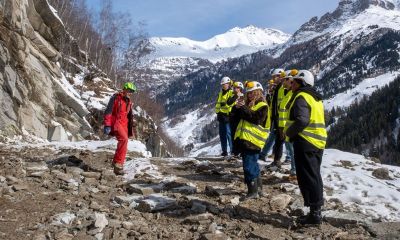
Value Creation Between Nature and Architecture, ZHAW Studio Urban Project | FS26
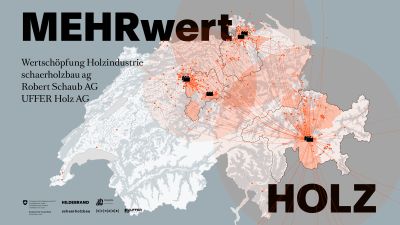
MEHRwert HOLZ, Wertschöpfung Holzindustrie

Building with Wood

Wood and the City – Care & Repair, ZHAW Summer School | 31.08.2024 – 08.09.2024

Wood and the City – Bioregion & Industry, ZHAW Summer School | 02.09.2023 – 10.09.2023