Wood and the City – Bioregion & Industry
ZHAW Summer School | 02.09.2023 – 10.09.2023
The ZHAW Summer School 2023 “Wood and the City” at the ZHAW School of Architecture, Design and Civil Engineering has combined forward-looking and pragmatic approaches to imagine visions for Attisholz-Areal, a post-industrial site near Solothurn. The climate crisis and the finite supply of natural resources have been central for the proposals and debates. Throughout ten days, international students with different backgrounds have explored emergent questions on urban design with wood and its productive chain as a model to deal with material limitations.
The Bioregional Scale
To ground the visionary ideas in their contexts, it is important to consider where the resources for urban transformations come from. By physically immersing ourselves in the site (e.g., cycling), we learn about larger design principles and circularities across governance scales. The built environment is just one part of this holistic picture.
Nonlinear Time Scales
We frequently view time as a linear progression of events when discussing future developments. However, as we look at the different parts of a bioregional context, whether they are human or non-human, they each have distinct life cycles. These time scales can sometimes intersect, converge or run in parallel.
Regenerative Systems versus Sustainability
Creating regenerative cultures goes beyond sustainability. Restorative design aims to restore the healthy safe-regulation of ecosystems, and reconciliatory design emphasizes that the so-called “nature” and “culture” are interconnected. This approach is not simply a technical, economic, ecological or social shift; it requires a profound change in how we view ourselves, our relationships with others, and our connection to all living things.
Efficiency is not equal Resilience
Efficiency seeks to optimize the existing environment, while resilience involves the ability to adjust to unexpected disruptions. Efficiency is often the opposite of resilience. To thrive in an uncertain future, it is important to design adaptive systems that can respond to various events, needs and demands. By reducing complexity, we prepare for a more resilient future.
“Nature” as constructed Entity by Society
To advance the use of biobased materials in construction, we must rethink our understanding of nature. It is commonly misunderstood as an untouched, idealized entity when, in reality, humans have shaped it for centuries. Just as there is not a single “culture”, there is not a single “nature”. Therefore, to envision the future we should approach the multiple “natures” and “cultures”.
Wood as a Thinking Model
The direct link between land and architecture embodied by wood presents a chance to advocate for harmonious and sustainable visions. As a limited resource, it can serve as an example on how to deal with other materials for construction, in particular, those bio-based. Wood is part of an attempt to broaden architecture's field of action. By understanding the whole value chain from the forest to the building, architects are better equipped to address environmental issues as well as inequalities.
Research and Praxis, general Asynchrony
Last but not least, a recurrent concept has been the discrepancy between research and praxis. The question of how to effectively translate experiments, awareness and ideas into everyday design practice remains a key challenge. Bridging this gap is a primary means to face the societal challenges ahead.
Project

Impressions


Organised by
ZHAW – University of Applied Sciences
School of Architecture, Design and Civil Engineering
Institute of Urban Landscape (IUL)
Guests
Aoife Donnelly (KSA), Ute Cristina Groba, Dan Handel, Regula Iseli (ZHAW), David Klemmer, Stefan Kurath (ZHAW), Tobias Luthe, Markus Schaefer, Martin Schütz, Esther Thürig
Partner Schools
Kingston School of Art (KSA)
The Oslo School of Architecture and Design (AHO)
Wood Industry Partner
schaerholzbau AG
Location Partner
Halter AG
Dates
02.09.2023 – 10.09.2023
Related
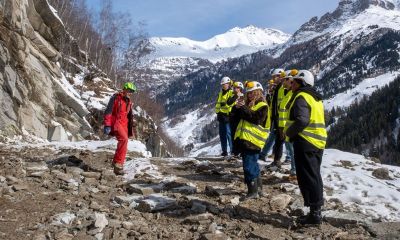
Value Creation Between Nature and Architecture, ZHAW Studio Urban Project | FS26
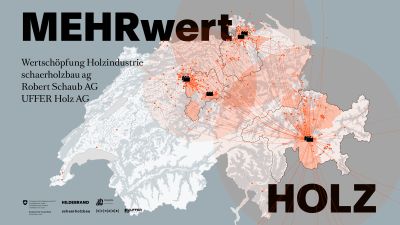
MEHRwert HOLZ, Wertschöpfung Holzindustrie
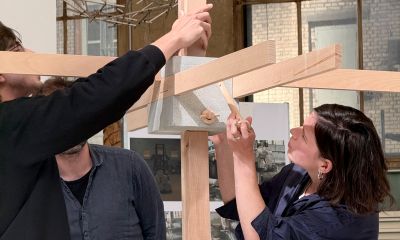
Wood and the City – Wood & Stone, ZHAW Summer School | 30.08.2025 – 07.09.2025

Building with Wood

Wood and the City – Care & Repair, ZHAW Summer School | 31.08.2024 – 08.09.2024